

Aagya Khatri on Jan 28, 2026
Reading Time: 6 Min
Every day, great ideas are born—but many never make it past the concept stage. Not because they lack value, but because turning them into real digital products often requires time, resources, and technical expertise that aren’t always available.
This gap between ideas and execution slows innovation and limits creativity, especially in web development.
Low-code, No-code development is abruptly changing that by reducing technical complexity and empowering folks with little or no coding experience to build functional, scalable web applications faster than ever. Through visual interfaces, drag-and-drop components, and pre-built templates, low-code/no-code platforms make software development more accessible without sacrificing impact.
However, it is not free from challenges such as scalability, intellectual property theft, and limitations.
Read on to discover how Low-code, No-code development enables non-tech users to bring robust digital solutions to life and ways to combat challenges.
How Does Low-Code, No-Code Work?
Low-code/no-code is a development platform for building digital solutions with minimal input. A person could assemble pre-built components and APIs in the form of nodes on a visual interface, provide logic, and arrange them in a few steps to create an end-product, for example, a booking application, real-time stock market update, or something more complex.
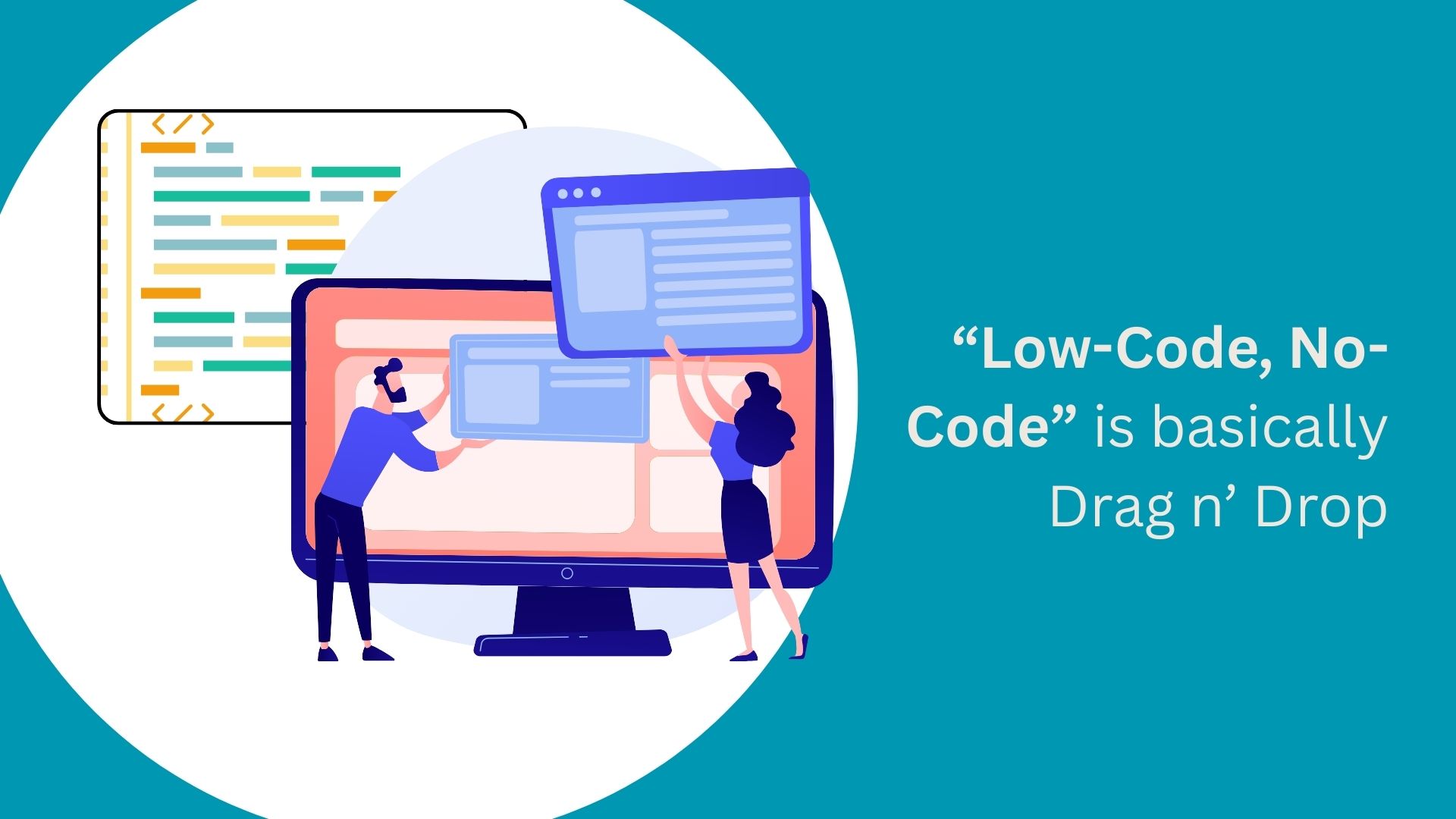
It eliminates the need to write and test large amounts of code, since the platform handles it all.
Research predicts that by 2026, over 75% of new applications will be developed using low-code/no-code technologies.
You would usually find these features and characteristics in low-code/no-code platforms.
|
Common Features |
Key Characteristics |
|
Visual drag-and-drop UI builders |
Reduce development time from months to weeks—or even days. |
|
Pre-configured templates and reusable modules |
Lower maintenance costs and reduce dependency on specialized developers |
|
Built-in database connections |
Support customization through optional scripting when needed. |
|
Workflow automation and logic builders |
Integrate easily with existing tools, databases, and APIs |
|
One-click deployment and hosting options |
Emphasize usability, speed, and rapid iteration. |
The Cycle of Traditional Development
It takes time and depends heavily on developer availability. But modern Low-code, No-code Web Development helps to tackle the time, resources, and effort required by
- Building visually and defining logic simultaneously.
- Testing instantly within the platform.
- Modifying features in real time.
- Deploying with minimal configuration.
- Updating continuously without downtime.
- Shortening feedback loops and reducing friction
How Non-Technical Professionals Can Build Real Solutions
The rapid rise of low-code/no-code development is not a trend driven solely by convenience. It grows because modern businesses face increasing pressure to build faster, adapt quicker, and innovate continuously. Traditional development struggles to keep up with these demands.
Low-code, No-code also aligns well with modern work environments. Remote teams, startups, and non-technical departments all benefit from tools that let them build without waiting in long IT queues and with minimal technical knowledge.
People who deeply understand business challenges but have little coding experience, such as most entrepreneurs, can design and launch applications by implementing their logic in assembly language. Each platform may have its own specifications, but the general assembly and development remain the same.
Here are a few popular examples of Low-code, no-code platforms.
|
Platform |
Key Features |
Best For |
Pricing Model |
|
Bubble |
Visual editor, database integration, custom logic without code |
Building full-stack web apps |
Free tier; paid from $25/month |
|
Drag-and-drop design, CMS, e-commerce |
Designers creating responsive sites |
Free for basics; price begins at $14/month |
|
|
Mobile-first, but web-capable; no-code app builder |
Rapid prototyping for apps |
Freemium: with $45/month |
|
|
Integration with the Microsoft ecosystem and AI builder |
Enterprise automation |
Included in Microsoft 365; standalone from $20/user/month |
|
|
Enterprise-grade, Low-code, No-code with advanced security |
Large-scale business applications |
Custom enterprise pricing |
Limitations, Challenges, and Responsible Use of Low-code, No-code
While low-code/no-code development speeds up and makes software development more accessible, it is not suitable for every project, and technical complexity can still arise.
Some applications require deeper technical control, advanced performance tuning, or highly customized logic that Low-code, No-code platforms may not fully support, including future product scaling.
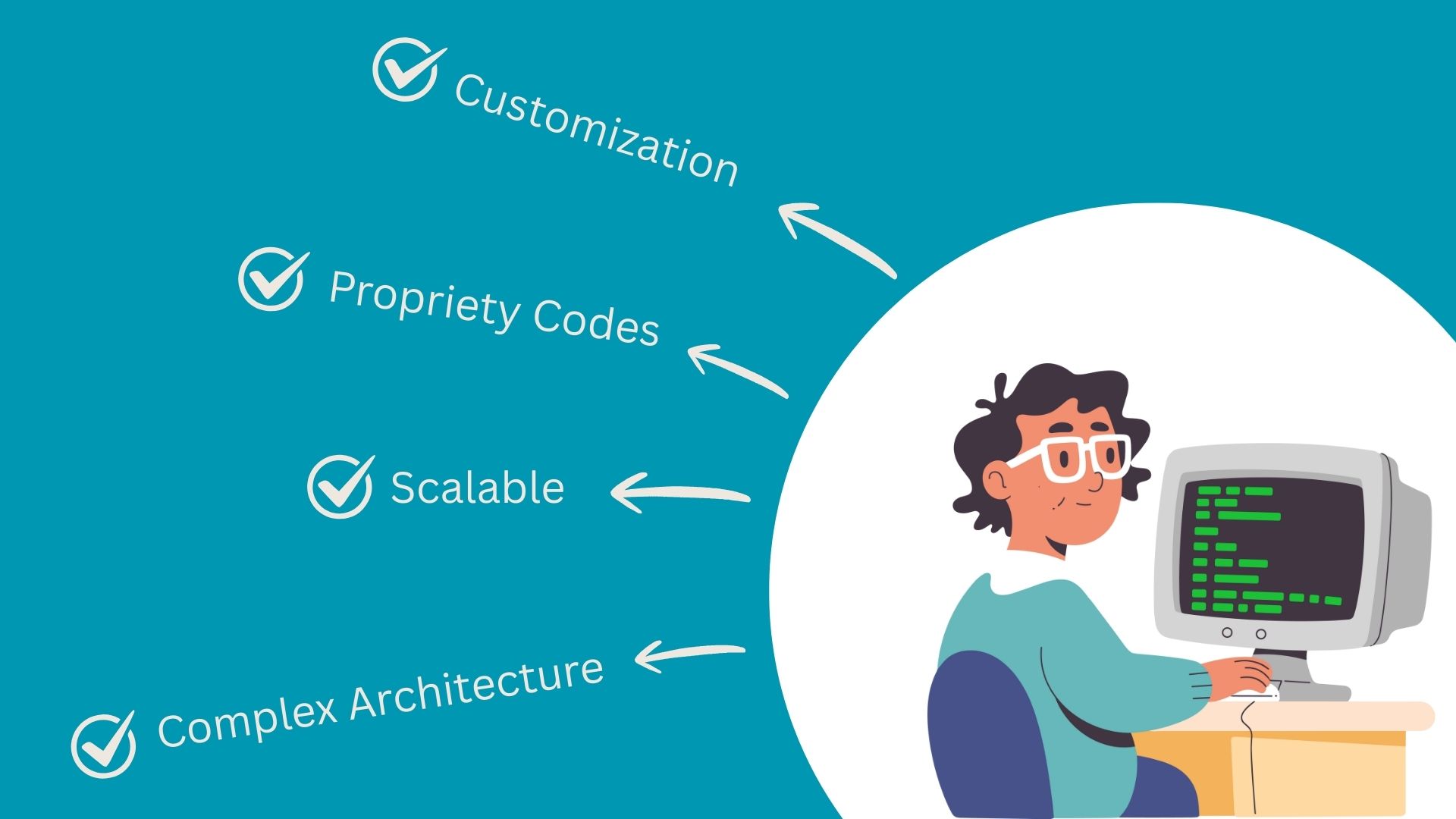
Therefore, you should be aware of the scale of the digital solution you wish to build on this platform, because a lack of vision is likely to cost you a lot in the future. A study concludes that Enterprise-level solutions often start around $1,500–$4,000+ per month or over $60k annually, depending on application complexity and user seats.
|
Limitations of Low-code, No-code Development |
Practical Solutions / Mitigations |
|
Limited customization for complex features |
Combine low-code/no-code with custom code extensions, or use hybrid development models. |
|
Vendor lock-in to proprietary platforms |
Choose platforms with export options, open APIs, and strong ecosystem support. |
|
Performance constraints for high-traffic apps |
Use Low-code, No-code for front-end or internal tools; offload heavy processing to custom back-end services. |
|
Scalability challenges as applications grow |
Select enterprise-grade Low-code, No-code platforms designed for scaling and modular architecture. |
|
Security and compliance concerns |
Implement governance policies, role-based access, and regular security audits. |
|
Integration limitations with legacy systems |
Leverage middleware, APIs, or iPaaS tools to bridge legacy infrastructure |
|
Hidden costs from subscriptions and add-ons |
Evaluate pricing models early and monitor the long-term total cost of ownership. |
|
Not ideal for highly specialized or real-time apps |
Use Low-code, No-code for MVPs and prototypes, then migrate critical components to custom development |
Here is a mid-way solution for you. If you wish to build a scalable, complex product, the most effective approach will be a hybrid model, where Low-code, No-code handles standard and straightforward features. At the same time, traditional coding handles complex, performance-critical tasks.
However, this scenario is most appropriate for building a demo application that will need to be scaled up later. The Lo-Code handles the initial development; thereafter, the developers take over and deliver a robust end-product.
Conclusion
Low-code, No-code development empowers non-technical professionals to turn ideas into real solutions promptly while supporting developers, focusing on solving problems smartly rather than writing more code.
If you wish to explore this further, talk to Searchable Design, the leading web application company in the USA, to turn your ideas into high-impact MVPs.
Comments(0)
Your email address will not be published. Required fields are marked *
Recommended Posts
Unlock the Secret of Power BI to Empower Your Data Analysis
Turn Raw Data into Real-Time Intelligence with Power BI
Why More Startups Are Offshoring Data Engineering Roles in 2026
Unlocking Global Talent for Faster, Smarter, Scalable Growth through Offshoring Data Engineering
How to Empower Your Web Development Project in 2025?
Empowering Your Web Build with the Right Strategy, Stack, and Global Talent Network
RECOMMENDED TOPICS
TAGS
- offshoring
- outsourcing
- artificial intelligence
- remote team
- nepal
- web development
- bot model
- data analytics
- digital marketing
- it support
- business process automation
- offshore
- legacy software
- saas
- app development
- sprint planning
- remote engineering
- development
- recommender engine
- ai engine
- cybersecurity
- growth hack
- tiktok
- seo
- voice search optimization
- engineering team
- modular app
- cloud based
- api based
- data entry
- api workflow
- service level agreements
- data warehouse
- database
- cloud storage
- engineering
- bot
- scalability
- remote engineers
- insurtech
- global talent pool
- techical consulting
- power bi
- business intelligence
- backoffice
- communication
- outsource
- it roles
- data engineering
- data engineer
- content development
- business development
- offshore talent
- agentic ai
- insurance
- web security
- project management
- pms
- project management system
- agile methodology
- data
- data centric approach
- customer insight
- it infrastructure
- it sustainability
- cloud computing
- data decision
- off
- test
About
Data Not Found
NEWSLETTER
Related Posts
How to Empower Your Web Development Project in 2025?
Empowering Your Web Build with the Right Strategy, Stack, and Global Talent Network
Secure Web Development Outsourcing: Embedding Cyber Hygiene in Offshore Pipelines
Build faster offshore without worrying about cyberthreats